How to Weigh Down a Canopy Tent in Wind
Always secure a canopy tent to the ground outdoors, and take it down in strong wind. Use stakes on grass or soil, sandbags on pavement, and the right amount of holding gear for the size of the tent. We do not publish a wind rating or a weight per leg for our tents, so this guide gives you the method, not a number to rely on.
Secure the frame every time
Order this
A tent is a large flat surface held up by thin legs. An unsecured frame can lift, slide or tip, with people and cars close by. So the rule is the same on every size: nothing goes up outdoors without being tied down or weighted down.
We sell the holding gear with the tent. A set of 4 sandbags adds $80.00 on the 10 x 10 and the 10 x 15, a set of 6 adds $120.00 on the 10 x 20, and ropes and stakes add $12.00. They are options on the product page, so choose them when you order and they arrive with the tent.
Grass, dirt or pavement
The ground decides the method. On grass or soil, ropes and stakes bite into the ground and are the usual choice. On concrete, asphalt or a parking lot, stakes cannot go in, so use sandbags on the legs. If your plots vary, such as a grass field one weekend and a parking lot the next, order the stakes and the sandbags together and use whichever the day calls for.
Whatever you choose, attach it to every leg, not just the windward side, because the wind changes direction during the day.
Walls change how the tent catches wind
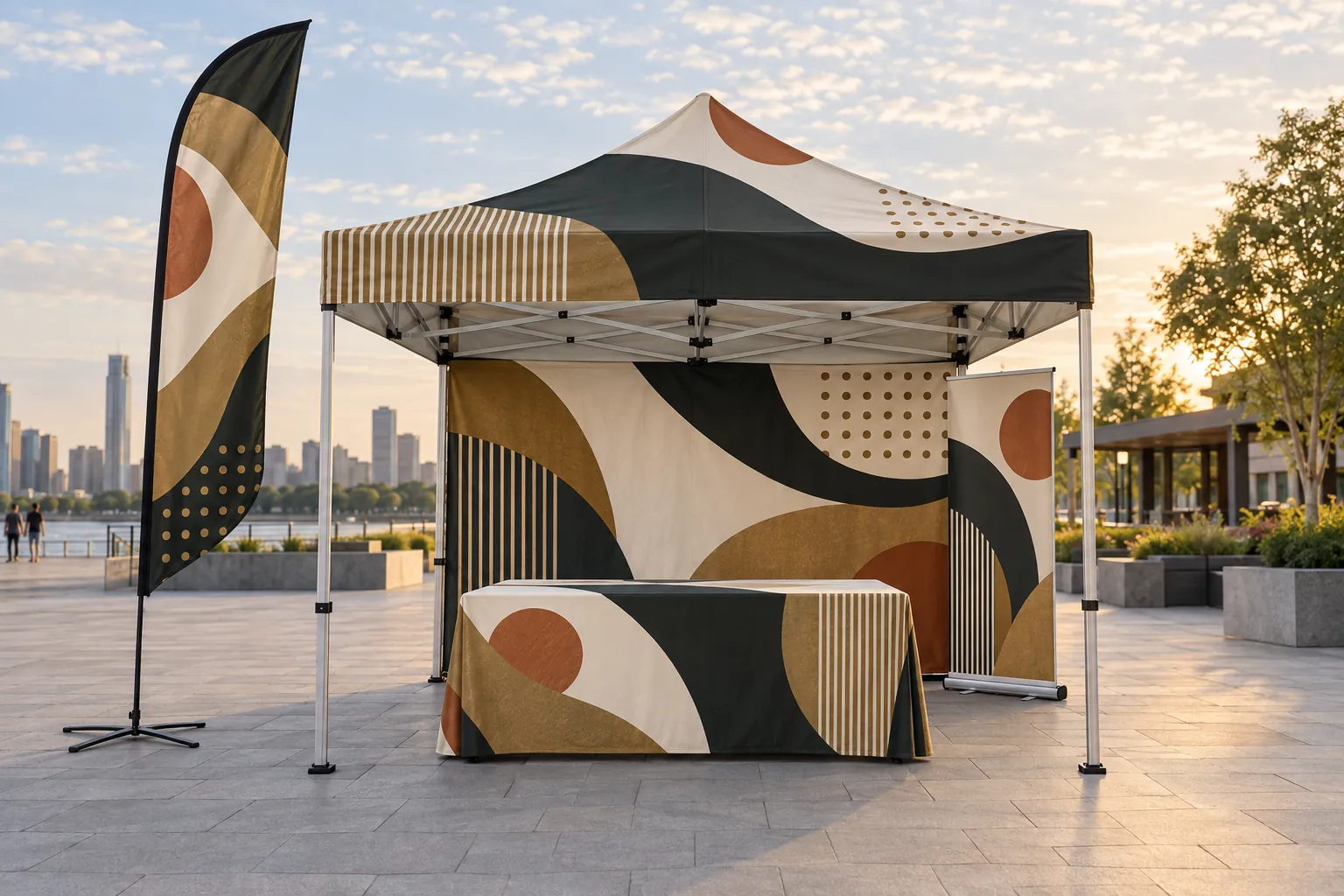
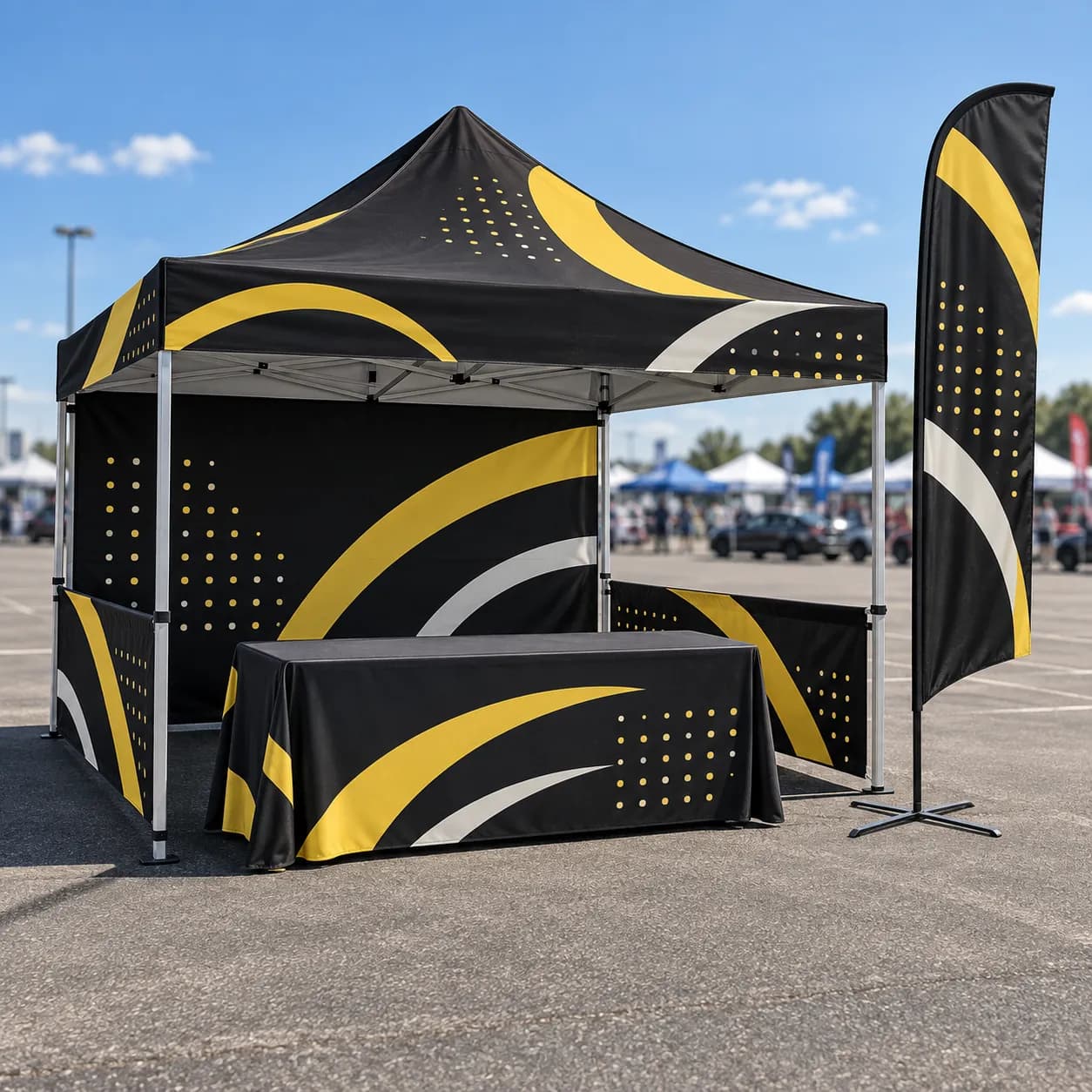
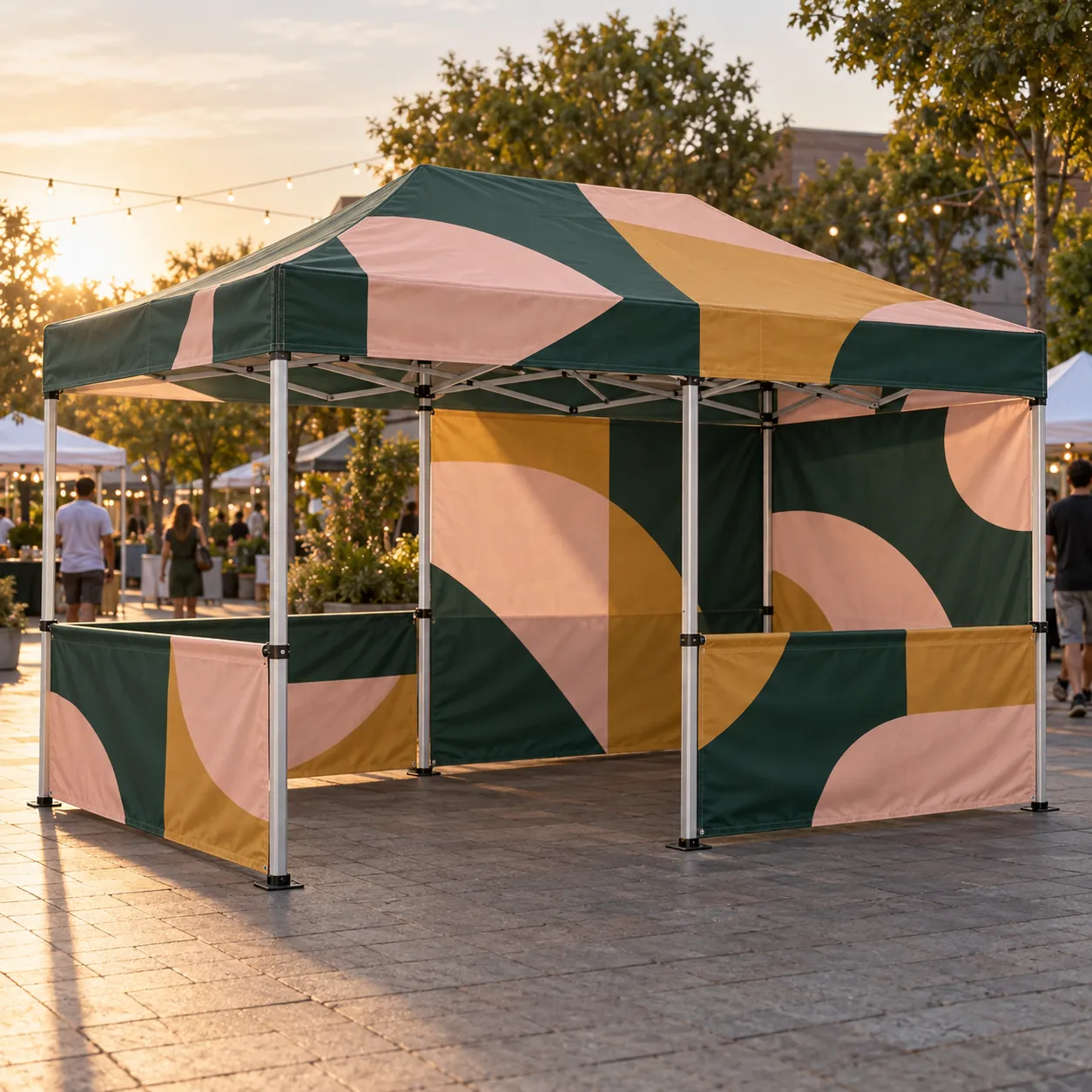
A tent with open sides lets wind pass through. Walls turn the same tent into a sail. A full wall on the windward side catches the most, and a half wall on a rail catches less, because the top half stays open. Walls are optional on every size, a full wall on the 10 x 10 adds $157.00 and a half wall with rail adds $202.50, so you can leave the walls off on a breezy day and still show your logo on the canopy.
Our guide to canopy tent walls shows the combinations.
When to take the tent down
If the tent starts to lift, shift or flap hard, take it down. A tent is easier to put back up than to repair, and nobody is hurt by an empty plot. Check the forecast before you leave and again when you arrive, and pick a plot where the wind is blocked if the venue lets you choose. Do not try to hold a tent down by hand.
Choose the size you can secure
A bigger tent is a bigger sail, so a 10 x 20 needs more holding than a 10 x 10. The 10 x 10 frame weighs about 40 lbs, the 10 x 15 about 46 lbs and the 10 x 20 about 63 lbs, and that weight is the frame, not a promise of how it behaves in wind. If your events are often windy or exposed, choose the smaller footprint or one with open sides.
Right now the Trade Show Sale takes 15% off trade show displays through December 1.
When you are ready, the custom canopy tents page has every size, or ask for a quote and tell us where you will set up.
Products in this guide
- Custom Canopy Tent 10 x 10
- Custom Canopy Tent 10 x 15
- Custom Canopy Tent 10 x 20
- Canopy Tent Walls and Hardware
Every order includes a free digital proof, and nothing prints until you approve it. Ask for a quote if you need a size or quantity that is not listed.
Quick answers
- How do you keep a canopy tent from blowing away?
- Secure the frame to the ground. Use ropes and stakes on grass or soil, and sandbags on pavement. Take the tent down if the wind gets strong.
- How many sandbags does a canopy tent need?
- Our sets are 4 sandbags for the 10 x 10 and 10 x 15, and 6 for the 10 x 20. We do not publish a weight per leg or a wind rating.
- Can I use stakes on pavement?
- No. Stakes need soft ground. On concrete or asphalt use sandbags.
- Do walls make a tent more likely to blow over?
- Walls catch more wind, and a full wall catches more than a half wall. Leave walls off, or on the sheltered side only, when it is breezy.
- Are sandbags and stakes included with the tent?
- No, they are optional add ons. Choose them on the product page when you order.
Questions on any of this? Email info@promomogul.com. We reply Mon to Fri, 8 to 6 Pacific.